
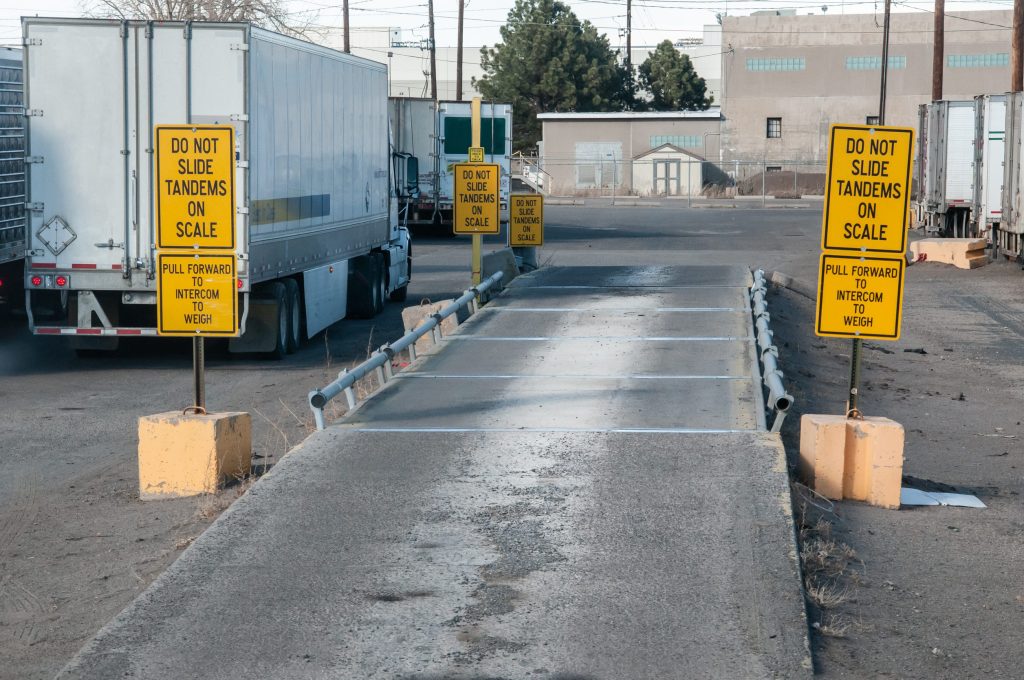
Not every weighing application needs a permanent concrete pit. For construction sites, temporary mining operations, agricultural harvest seasons, and disaster relief projects, a mobile weighbridge offers the accuracy of a permanent system with the flexibility to move when the job moves. In South Africa, where mining and construction operations frequently shift between sites, mobile weighbridges are becoming an essential tool for weight management and compliance.
Also called portable weighbridges or transportable axle weigh pads, these systems deliver trade-approved accuracy without the civil works, long lead times, and permanent footprint of traditional pit-mounted weighbridges.
What Is a Mobile Weighbridge?
A mobile weighbridge is a self-contained weighing system designed to be transported between locations and operational within hours of arrival. Unlike permanently installed weighbridges that require concrete foundations, drainage, and fixed cabling, mobile units arrive on a trailer or flatbed and can be positioned on any relatively flat, hard surface — gravel, compacted earth, asphalt, or concrete.
Modern mobile weighbridges achieve the same accuracy as permanent units (0.1–0.2% of applied load) and are NRCS-approved and SANAS-verifiable for trade use. They typically come in two configurations:
- Full-vehicle mobile weighbridges — a complete deck set (typically 9m to 18m long) that weighs the entire truck in one pass. These are similar to permanent weighbridges but mounted on a transportable frame with fold-down ramps.
- Portable axle weigh pads — individual pads (typically two or four) that weigh one axle at a time. The truck drives slowly across each pad, and the system sums the axle weights to calculate total vehicle weight. These are lighter, cheaper, and quicker to deploy.
Industries That Benefit from Mobile Weighbridges
Construction
Construction sites have a beginning and an end. A mobile weighbridge lets you monitor incoming materials (aggregates, cement, steel) and outgoing waste throughout the project. When the project finishes, the weighbridge moves to the next site. No abandoned concrete foundations, no sunk costs in a location you will never use again. Construction weighbridge solutions save contractors tens of thousands of rands in civil works per project.
Mining
Open-cast and short-life mining operations can last anywhere from 2 to 10 years. A mobile weighbridge is an ideal fit — it handles the heavy payloads (up to 100 tons per axle for some configurations) and relocates when the seam is exhausted. Mining weighing systems in South Africa increasingly use portable units for exploration sites, temporary crushing plants, and contract mining operations.
Agriculture
Harvest season is a race against time. A mobile weighbridge can be deployed to a farm for the harvest period to weigh grain trucks, livestock transports, and fertiliser deliveries. When harvest ends, the unit is stored until next season. This eliminates the need for a permanent weighbridge on a farm that may only need accurate weighing 6–8 weeks per year.
Disaster Relief & Temporary Projects
After floods, fires, or infrastructure failures, temporary weighbridges help manage the logistics of debris removal, material delivery, and aid distribution. Mobile units can be airlifted or trucked to remote areas and operational within a day.
Mobile vs Permanent Weighbridge: Key Differences
| Feature | Mobile Weighbridge | Permanent Weighbridge |
|---|---|---|
| Installation time | 4–8 hours | 2–6 weeks |
| Civil works required | Minimal (level surface) | Extensive (excavation, concrete, drainage) |
| Cost of installation | R5,000 – R20,000 | R80,000 – R250,000 |
| Relocatable | Yes — multiple times | Not practical |
| Capacity range | 30–80 tons (full vehicle) 10–20 tons per axle (pads) |
30–100 tons |
| Accuracy | 0.1–0.2% | 0.05–0.1% |
| Price (new) | R250,000 – R450,000 | R350,000 – R850,000+ |
| Best for | Temporary / mobile operations | Permanent, high-volume sites |
Advantages of Mobile Weighbridges
- Rapid deployment — operational within hours, not weeks
- No permanent infrastructure — no planning permission needed for foundations in most cases
- Low installation cost — a fraction of permanent weighbridge installation
- Flexible relocation — move between sites as needed
- Capital efficiency — one weighbridge serves multiple sites over its lifespan
- Same legal compliance — NRCS-approved and SANAS-verifiable for trade use
- Lease options available — rent by the month or season for short-term projects
Limitations to Consider
- Slightly lower accuracy — permanent systems with embedded foundations achieve marginally better precision, though mobile units are well within trade requirements
- Surface requirements — the ground must be level and firm enough to support the loaded vehicle
- Security — a mobile unit can be stolen or vandalised; permanent installations are more secure
- Weather exposure — mobile weighbridges are fully exposed; permanent units can be sheltered under a roof
- Axle pad limitations — axle pad systems require a slow, controlled drive-over and may not work well for very long or articulated vehicles
Mobile Weighbridge Costs in South Africa
Pricing for mobile weighbridge solutions in South Africa varies by type and capacity:
- Portable axle weigh pads (set of 2–4) — R120,000 – R250,000
- Full-vehicle mobile weighbridge (9–18m, 40–60 ton) — R250,000 – R450,000
- Heavy-duty mobile weighbridge (60–80 ton, for mining) — R400,000 – R650,000
- Monthly rental — R15,000 – R40,000 per month (depending on type and duration)
These prices include load cells, indicator, and basic cabling. Delivery, setup, calibration, and training are typically extra. Contact us for a quote tailored to your application.
Frequently Asked Questions
Is a mobile weighbridge as accurate as a permanent one?
How long does it take to set up a mobile weighbridge?
Can a mobile weighbridge be used for legal trade?
What is the maximum weight a mobile weighbridge can handle?
Can I rent a mobile weighbridge in South Africa?
About the Author
Linkweigh-In Technical Team — The Linkweigh-In team brings over a decade of experience in industrial weighing solutions across South Africa. As NRCS-verified and SANAS-accredited specialists, they help businesses in Gauteng and beyond choose, install, and maintain weighing equipment that keeps operations accurate, compliant, and profitable. Contact them at 010 595 1696 or visit linkweighin.co.za.