
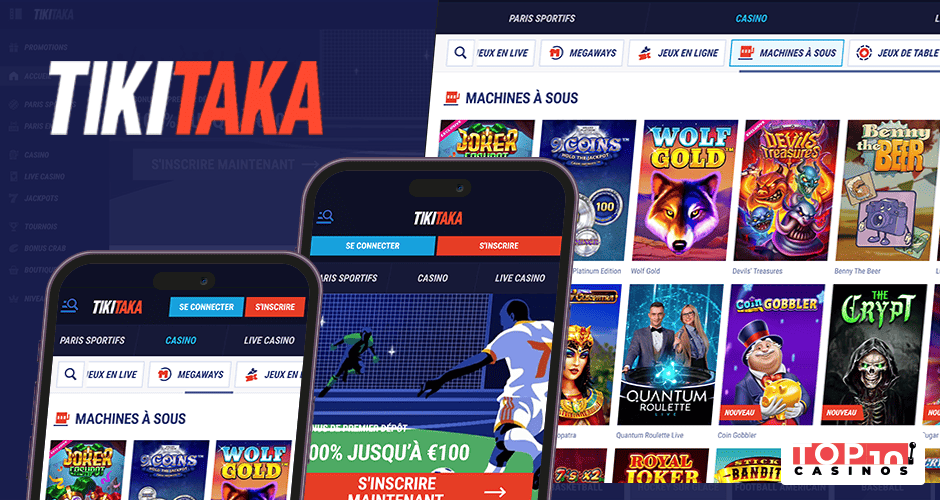
Over at Tikitaka Casino know that starting in online gaming can feel overwhelming, especially when you’re trying to figure out whether a platform actually operates with transparency. Among the most reliable shortcuts to safety is the casino license. A valid license is not merely a stamp hidden in the footer; it’s a legally binding agreement that regulates every transaction, every game outcome, and every data protection step you rely on. Throughout our years of experience, we’ve watched a strong regulatory framework convert a chaotic sector into a trusted environment where players can focus on entertainment rather than unease. As we break down what a license involves, we uncover the levels of scrutiny operators endure to earn that stamp of approval. From financial audits to game honesty testing, the process provides no space for shortcuts to be skipped. This article will walk you through the complete licensing environment, clarify the jargon, and show you why using a correctly licensed brand like Tikitaka Casino is the key decision you can take for your peace of mind.
The way License Verification Works Practically
Seeing a license badge on a casino’s website is merely the first step; understanding how to verify it independently is the area where your power as a player resides. Every legitimate regulatory body holds a public register of its licensees. To check a license, you can usually click on the badge itself, which should link directly at the casino’s entry on the regulator’s website. That page will display the license number, the legal entity operating the casino, the date of issue, and its current status. We strongly recommend that you never skip this process. A few minutes of verification can prevent years of frustration. If the badge is not clickable or redirects to a generic image file instead of the official registry, treat that as a major red flag. Cross-reference the company name listed on the registry with the one stated in the casino’s terms and conditions. Any mismatch implies a lack of transparency or potentially fraudulent activity.
We also advise players to look for the details of the Alternative Dispute Resolution (ADR) provider associated with the license https://tikitakacasino.net.pl/legal-and-affiliates. Reputable regulators often require casinos to nominate an independent third party to handle unresolved complaints. This information is usually listed in the complaint procedure section of the terms and conditions. When you see that a casino has a clear path for escalation that ends with an impartial body, you can be certain that you are not left without recourse. At Tikitaka Casino, we make this process straightforward. Our licensing information is displayed prominently, and the verification link provides an instant, transparent snapshot of our regulatory standing. We believe that a license you cannot easily verify is worth very little, and we operate with the kind of openness that makes checking our credentials a matter of seconds, not hours. sprawdź stronę
Player Protection Mechanisms Embedded in Licensing
A contemporary casino license is significantly more than a fiscal agreement; it is a thorough consumer protection charter. One of the key mechanisms is the compulsory implementation of responsible gambling tools. Under a strong license, we are mandated to offer deposit limits, loss limits, session time reminders, and self-exclusion options that are genuinely effective and may not be circumvented on a whim. These tools are not discretionary add-ons; they are regulatory requirements that are audited for functionality. Another layer of protection is the strict handling of personal data. Licensed casinos must adhere to data protection regulations such as GDPR in Europe, ensuring your identification documents, payment details, and playing history are secured and managed lawfully. There is also the matter of anti-money laundering (AML) checks. While they might seem intrusive when you are asked for a proof of address, these checks are mandated by license terms to prevent financial crime and to protect the integrity of the whole platform.
The operational fairness of games is assured through periodic testing by independent laboratories like eCOGRA, iTech Labs, or GLI. These bodies certify that the random number generators produce random results and that the stated Return to Player (RTP) percentages are accurate over millions of spins. A license that necessitates such certifications takes the trust equation out of the operator’s hands and positions it with objective scientists. We find this aspect especially reassuring, as it removes any lingering doubt about whether the house has an irregular advantage. For us at Tikitaka Casino, complying with these protection mechanisms is not a burden but the essential groundwork upon which we build lasting player relationships. Every tool we offer, from session limits to transparent RTP data, is a direct outcome of our licensed status, and we proudly view these safeguards as essential features rather than regulatory hurdles.
Tikitaka Casino’s Legal Structure and Your Confidence
At Tikitaka Casino, we have chosen to build our legal framework around guidelines that surpass the baseline requirements, because we genuinely feel that your peace of mind is the ultimate competitive advantage. Our licensing structure secures that every game you play has been certified for fairness, every bonus term has been composed to be transparent, and every withdrawal request is processed according to well-defined timelines that we must honor. We maintain a segregated account structure to protect your funds, meaning that even in the extreme and unlikely event of our financial collapse, your balance remains secure and separate from our operational capital. This extent of financial integrity is directly mandated by our license, and we undergo periodic audits to ensure that we are upholding it to the letter. Our commitment to data privacy is absolute, employing the highest encryption levels and never sharing your information with unauthorized third parties.
We also place immense emphasis on the clarity of our terms and conditions. We know that legal documents can be overwhelming, so we have worked hard to present them in plain, understandable language without losing legal precision. Key points to look for in our terms include the following commitments that shape our licensed operation:
- Straightforward wagering requirements for bonuses, stated as a straightforward factor with no hidden sub-clauses.
- Explicit maximum withdrawal limits and processing times for each payment method.
- A detailed privacy policy that explains exactly what data we gather and why, in compliance with GDPR.
- A fair complaint procedure that advances to an independent ADR if you feel an issue has not been resolved internally.
- For our affiliates, a transparent commission model with real-time reporting and prompt payments backed by our regulatory standing.
These points are not just abstract https://www.fizyka.pw.edu.pl/en/content/download/1143/17302/file/Fizyka%20na%20PW%201965-2015.pdf promises; they are enforceable obligations that we willingly assume as a licensed entity.
The Basis of Trust: Why Casino Licenses Are Necessary
Online casino licenses are established to fill the void between digital anonymity and real-world accountability. Without a regulatory body watching over operations, there would be no independent verification that the games return fair odds, that your deposits are kept apart from operational funds, or that your identity documents are secured by bank-level encryption. A license turns a software platform into a legally accountable entity. The regulatory authority granting the license acts as a guardian, authorized to impose fines, suspend operations, and even cancel the license entirely if the operator neglects its obligations. For players, this translates into a straightforward promise: if something goes wrong, there is a higher power to appeal to that is not the casino itself. We have always held that this external oversight is non-negotiable. It forces operators to enforce transparent terms and conditions, provide responsible gambling tools, and adhere to anti-money laundering protocols. A license is the only certification that the casino’s promises are backed by law, not just marketing copy.
Important Licensing Authorities to Understand

Not all licenses carry the same weight, and knowing the distinctions helps you choose wisely. The most respected jurisdictions possess rigorous application processes, continuous monitoring, and player complaint mechanisms. Among them, the Malta Gaming Authority (MGA) stands out for its comprehensive framework that covers both B2C and B2B operations, establishing it as a benchmark in Europe. The United Kingdom Gambling Commission (UKGC) is another major authority, known for its strict enforcement and heavy penalties, though it focuses primarily on the UK market. For many operators serving international audiences, including Poland, the Curacao eGaming license remains a popular entry point due to its long history and pragmatic approach. Nevertheless, a Curacao license can vary in reliability depending on the specific master license holder. Newer regulators like the Estonian Tax and Customs Board and the Swedish Spelinspektionen are also earning acknowledgment for their modern, player-centric regulations. Each of these authorities mandates regular audits, and we advise players to look past the logo and examine the specific rules and player protection funds tied to each jurisdiction.
When we assess a license, we don’t just look at the country of issue. We scrutinize whether the regulator requires independent testing of random number generators, whether there is a mandatory cooling-off period for self-exclusion, and how effectively the authority handles disputes. A strong license means that the casino must submit financial reports proving player funds are held in separate accounts, a practice known as segregation. It also means that the operator is bound by strict advertising standards, banning misleading bonuses. For affiliates and partners, this distinction is similarly crucial. Promoting a casino that holds a top-tier license protects your own reputation and ensures your audience is guided to a safe environment. At Tikitaka Casino, we harmonize our operations with standards that meet the expectations of the most discerning European players, which is why comprehending these regulatory subtleties is a cornerstone of our compliance strategy.
In what manner Licensing Shapes Affiliate Partnerships
The world of casino affiliates works on a foundation of mutual trust, and that trust is impossible to build without a solid licensing framework. When we work with our affiliate partners, we do so with the full backing of our regulatory obligations, which immediately creates a professional tone. Affiliates who market Tikitaka Casino can rest assured that they are sending their traffic to a platform that will treat players fairly, pay out winnings promptly, and handle data with respect. This is no small matter; an affiliate’s reputation is on the line with every recommendation they make. A casino that has its license revoked or faces regulatory scrutiny can cause severe reputational damage to its partners. A clearly licensed operation like ours provides affiliates with stable, compliant marketing materials that do not make unrealistic promises, thereby safeguarding the affiliate from inadvertently misleading their audience.
From a legal perspective, a license places specific rules on how an affiliate programme must be run. These rules cover transparent tracking of referrals, fair commission structures that are not altered without notice, and strict prohibitions on targeting vulnerable groups or minors. We view our affiliate programme as an extension of our licensing responsibilities. Our partners get detailed terms that outline exactly how revenues are calculated, when payments are issued, and how disputes are resolved. This clarity stems directly from operating under a regime that demands nothing less. For anyone considering entering the affiliate space, our consistent advice remains to only work with licensed operators. The license serves as a backbone, guaranteeing that the promises made in an affiliate agreement are legally enforceable and that the operator’s long-term viability is guaranteed through ongoing compliance checks.
Warning Signs: How to Identify an Unlicensed Operation
Understanding to identify an illegal or badly supervised casino is a technique that can protect you from serious monetary and psychological hardship. The primary and most apparent warning sign is the missing presence of any authorization information in the website footer. A proper operator is confident of its license and wants you to notice it. If you come across a unclear phrase like “managed by a authorized company” without a specific jurisdiction or a active verification link, you should close the page. Another red flag is intense, high-pressure bonus offers that seem too good to be true. Unlicensed operators often dangle massive deposit matches with impractical wagering conditions that are meant to make withdrawal mathematically unachievable. A licensed casino’s promotions will always balance attractiveness with reasonable playthrough terms, and those terms will be presented upfront. You should also beware of sites that are missing strong responsible gambling tools or that make it difficult to set deposit limits.
Payment methods can also disclose a great deal. Unregulated casinos frequently push for cryptocurrency-only transactions or use obscure payment processors that provide no chargeback chances. While many licensed casinos now accept crypto, they do so alongside traditional, traceable banking options and with full KYC verification. The absence of a mandatory identity verification process before withdrawals is a further serious indicator. Licensed casinos are obliged by law to verify your identity to prevent fraud and underage gambling; an operator that allows anonymous cashouts is operating outside the law. Finally, rely on your instincts when it comes to website quality and customer support. Broken English, no live chat, and an unwillingness to answer questions about regulatory status are all part of the same dangerous pattern. We urge you to apply these checks rigorously, because a safe environment like Tikitaka Casino will pass them without a moment’s hesitation.
Comprehending online casino licenses is not a dry legal exercise; it is an empowering act of self-protection. From the foundational trust offered by top-tier regulators, to the step-by-step verification process, and the deep impact licensing has on affiliate relationships, every aspect we have discussed converges on one truth: a license is your strongest ally. At Tikitaka Casino, we live by the standards our license sets, and we encourage every player and partner to hold us accountable to them. By opting to engage only with transparent, regulated environments, you reclaim control and ensure that the focus stays on the thrill of the game, never on the safety of your stake.